

When people talk about luxury timepieces that combine modern design with advanced materials, one name rado watch consistently appears — Rado. For decades, the brand has stood apart from traditional watchmakers by focusing not just on accuracy but also on innovation, durability, and futuristic aesthetics.
A rado watch is not simply a device to tell time. It is a design philosophy built around minimalism, scratch-resistant surfaces, and lightweight comfort. Whether worn daily, at formal events, or collected as an investment, these watches occupy a unique position between classic Swiss craftsmanship and modern material science.
This detailed guide explains everything: history, iconic models, materials, durability, value, authenticity, and how to choose the right one
Origins of the rado watch
The story begins in 1917 in Lengnau, Switzerland, when the Schlup brothers started a small watch movement workshop. For decades they produced movements for other companies. But in 1957, they launched their own brand — and that was the moment the modern rado watch was born.
From the start, the company had a different mindset:
- Not just precision
- Not just luxury
- But durability and innovation
Instead of competing with traditional gold and steel watchmakers, they experimented with materials never used in wristwatches before.
This decision shaped the brand’s identity forever.
The breakthrough: scratch-resistant revolution
In 1962, the world saw one of the most important developments in watchmaking — the first scratch-resistant watch, the DiaStar 1.
Before this, luxury watches scratched easily, especially gold ones. Owners had to polish them often. The new material used in the rado watch case was extremely hard, making it resistant to everyday wear.
This single invention changed consumer expectations:
A luxury watch should stay new-looking for years, not months.
From that moment, durability became the brand’s signature feature.
Why a rado watch is different from other Swiss watches
Most Swiss watches emphasize heritage and mechanical complexity. A rado watch emphasizes:
1. Advanced materials
Instead of traditional metals, the brand uses:
- High-tech ceramic
- Sapphire crystal
- Plasma ceramic
- Hardmetal alloys
2. Lightweight comfort
Despite being strong, they feel lighter than steel watches.
3. Skin friendliness
Ceramic models rarely cause allergies or irritation.
4. Modern aesthetics
Minimalist, futuristic, often slim profiles.
5. Longevity
A properly maintained rado watch can look new even after 10–20 years.
The famous materials used in a rado watch
Understanding materials is the key to understanding the brand.
High-tech ceramic
This is the core identity.
Properties:
- Extremely scratch resistant
- Lightweight
- Warm to the touch (not cold like metal)
- Fade resistant
- Hypoallergenic
Unlike coated watches, the color is built into the material — it won’t peel.
Sapphire crystal
Almost every rado watch uses sapphire glass.
Benefits:
- Near diamond-level hardness
- Clear visibility
- Anti-reflective
- Doesn’t cloud over time
Plasma ceramic
A special metallic-looking ceramic created through heat treatment — not coating. So it won’t chip or fade.
Hardmetal
A tungsten carbide alloy stronger than steel and highly resistant to wear.
Popular rado watch collections
The brand offers several iconic series, each with a distinct personality.
Captain Cook – vintage adventure style
Inspired by 1960s diving watches, this collection combines retro design with modern materials.
Key features
- Rotating bezel
- Water resistance
- Bold markers
- Automatic movement
Ideal for:
- Casual wear
- Collectors
- Outdoor enthusiasts
This is one of the fastest-growing lines in popularity.
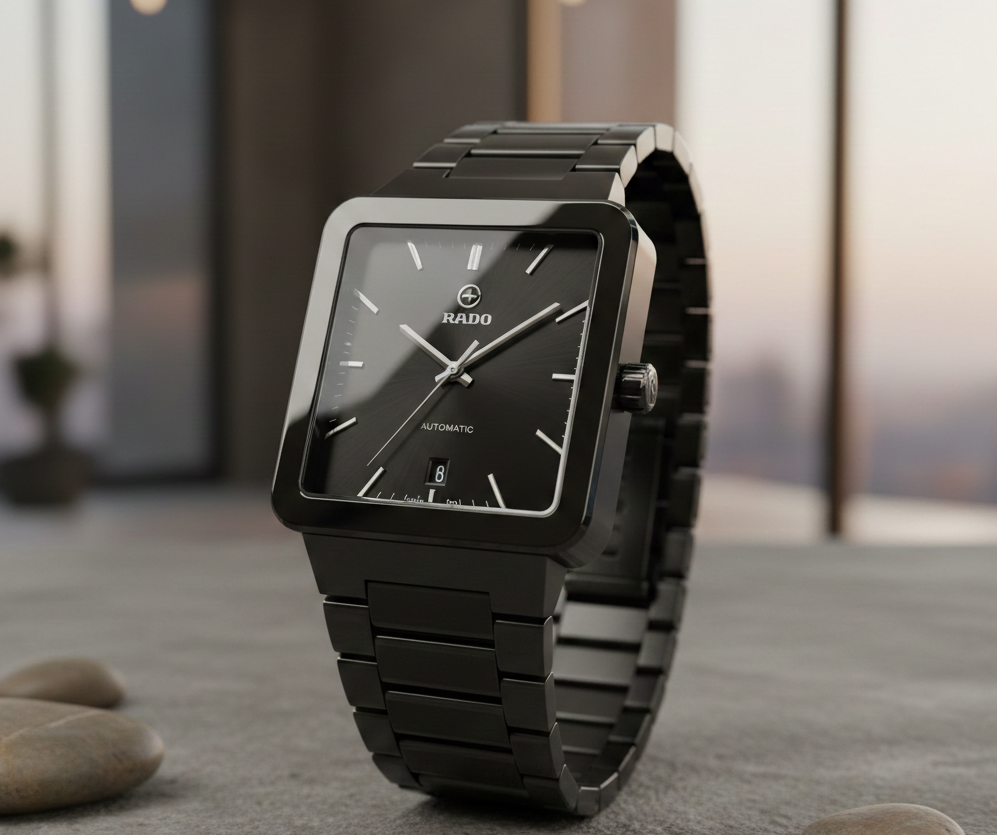
True – minimalist ceramic elegance
A perfect representation of modern luxury.
Characteristics
- Ultra-slim profile
- Full ceramic case and bracelet
- Lightweight comfort
- Contemporary look
Best for:
- Office wear
- Daily luxury
- Formal outfits
Many first-time buyers choose this as their first rado watch.
Centrix – balanced classic design
This series blends traditional styling with modern materials.
Highlights
- Steel and ceramic combination
- Dressy appearance
- Versatile use
- Automatic and quartz options
A very safe choice if you want one watch for all occasions.
HyperChrome – sport luxury
Designed for active lifestyles.
Features
- Strong ceramic construction
- Sporty design
- Water resistance
- Larger case sizes
Great for people who want durability plus luxury presence.
DiaStar – the legend
The original scratch-resistant watch line continues today.
Why it matters
- Historical significance
- Unique oval case
- Hardmetal construction
- Vintage appeal
Collectors appreciate this deeply.
Movements inside a rado watch
A rado watch may use either mechanical or quartz movement.
Automatic movement
Powered by wrist motion.
Advantages
- Traditional craftsmanship
- No battery
- Collector value
Disadvantages
- Needs wearing regularly
- More expensive
Quartz movement
Battery powered.
Advantages
- Extremely accurate
- Lower maintenance
- More affordable
Disadvantages
- Less emotional appeal for collectors
Both are Swiss-made and reliable.
Is a rado watch durable enough for daily use?
Yes — actually more than many luxury watches.
Resistance comparison
| Feature | Steel watch | Gold watch | rado watch |
|---|---|---|---|
| Scratch resistance | Medium | Low | Very high |
| Color fading | Possible | Possible | Very rare |
| Comfort | Heavy | Heavy | Lightweight |
| Longevity appearance | Average | Wears fast | Long-lasting |
Many owners report their watch still looking new after years of use.
How to choose the right rado watch
Buying depends on personality and lifestyle.
For office professionals
Choose:
- Centrix
- True
Slim and elegant.
For collectors
Choose:
- Captain Cook
- DiaStar
Historical importance and resale interest.
For active lifestyle
Choose:
- HyperChrome
Durability with sport styling.
For minimalists
Choose:
- True Square ceramic models
Clean and modern.
How to identify an original rado watch
Because the brand is popular, counterfeits exist. Here’s how to check authenticity.
1. Sapphire test
Water drop stays round — doesn’t spread quickly.
2. Weight
Ceramic models feel light but solid, never hollow.
3. Logo quality
Sharp printing, no blur.
4. Serial number
Engraved clearly on case back.
5. Movement smoothness
Automatic second hand glides smoothly.
6. Price
If it’s extremely cheap — it’s fake.
Maintenance tips
Even though highly durable, proper care keeps the watch perfect.
Cleaning
Use soft cloth and mild soap water.
Avoid extreme impacts
Scratch resistant ≠ shatter proof.
Service interval
Every 4–6 years for automatic models.
Storage
Keep away from strong magnets.
Value retention and investment potential
A rado watch is not usually bought as a pure investment like some high-end mechanical brands — but it retains value better than many fashion watches.
Why value holds
- Swiss origin
- Material longevity
- Timeless design
- Global recognition
Popular models like Captain Cook have shown increasing demand in recent years.
Who should buy a rado watch?
This brand is perfect for people who:
- Want luxury without fragility
- Prefer modern design over vintage tradition
- Need daily wear durability
- Have metal allergies
- Appreciate minimal aesthetics
It is less suited for buyers who only want traditional gold dress watches.
Common myths about a rado watch
Myth 1: Ceramic breaks easily
Reality: It’s harder than steel. Only strong impact can damage it.
Myth 2: It’s a fashion watch
Reality: Swiss made with serious engineering.
Myth 3: Too modern for formal wear
Reality: Many models fit perfectly with suits.
Myth 4: Lightweight means cheap
Reality: Lightweight comes from advanced materials, not low quality.
Price ranges
Prices vary depending on movement and materials.
| Category | Approx Range |
|---|---|
| Entry quartz | Affordable luxury |
| Automatic ceramic | Mid luxury |
| Limited editions | Higher luxury |
Because of durability, cost per year of use is actually low.
How it compares with other luxury brands
A rado watch occupies a unique niche.
| Feature | Traditional Swiss | Fashion brands | rado watch |
|---|---|---|---|
| Heritage | Very strong | Weak | Strong |
| Durability | Moderate | Low | Very high |
| Design | Classic | Trend based | Futuristic classic |
| Materials | Steel/gold | Coated alloys | Advanced ceramics |
| Maintenance | Higher | Medium | Lower wear damage |
Wearing experience
Owners often describe three surprising things:
- You forget it’s on your wrist due to comfort
- It rarely scratches even after years
- It matches both casual and formal clothing
This combination is rare in watchmaking.
Frequently asked questions
Is a rado watch waterproof?
Most models are water resistant, not diving watches unless specified.
Can ceramic fade?
No — color is part of material.
Is it suitable for hot weather?
Yes, ceramic doesn’t heat like metal.
Does it need polishing?
Almost never.
Is it good for daily wear?
It’s actually designed for it.
Future of the rado watch
The brand continues focusing on material innovation rather than complicated mechanisms. The direction includes:
- Ultra-light cases
- New ceramic colors
- Sustainable materials
- Modern integrated bracelets
Instead of copying past designs, the philosophy remains future-oriented.
Final thoughts
A rado watch stands in a special category of luxury — not purely traditional, not purely fashion. It represents durability, comfort, and modern aesthetics combined with Swiss precision.
While many watches look beautiful in a showroom but age quickly, this one often does the opposite: it may look almost unchanged after years of use. That alone explains its loyal following worldwide.
If you want a timepiece that balances elegance with practicality — something you can wear daily without worrying about scratches — this brand becomes a logical choice.
In a world where luxury often means delicate, a rado watch proves luxury can also mean resilient.
READ MORE: UPLOAD ARTICLES
