

An impeller is one of the most important components found in pumps, compressors, blowers, turbines, and various industrial machines. Although it may appear to be a simple rotating part with blades or vanes, the impeller plays a critical role in moving fluids, increasing pressure, and improving system efficiency. Whether used in water treatment plants, chemical processing facilities, HVAC systems, marine equipment, or automotive cooling systems, impellers are engineered to deliver reliable fluid movement under different operating conditions.
Modern industries rely on high-performance impeller to achieve energy efficiency, reduce operating costs, and maximize equipment lifespan. Advances in manufacturing technologies, precision engineering, and material science have led to highly specialized impeller designs capable of handling everything from clean water to corrosive chemicals, abrasive slurries, and high-temperature liquids. Selecting the correct impeller requires understanding how different designs affect flow rate, pressure, efficiency, and maintenance requirements.
This comprehensive guide explains what an impeller is, how it works, the major types of impellers, materials used in manufacturing, industrial applications, maintenance practices, common performance issues, and future innovations. Whether you are an engineer, technician, student, plant operator, or someone interested in fluid mechanics, understanding impeller technology provides valuable insight into one of the most essential mechanical components used across industries.
What Is an Impeller and Why Is It Important?
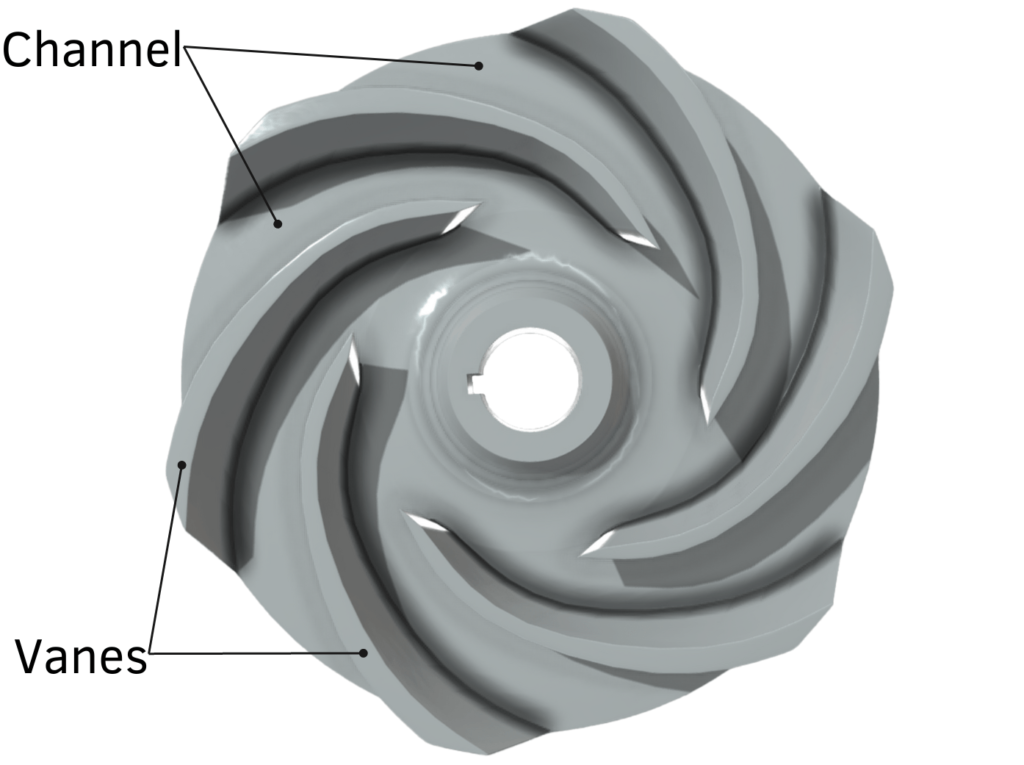
An impeller is a rotating component fitted with specially designed blades or vanes that transfer energy from a motor or engine into a fluid. As the impeller spins inside a pump or similar machine, it accelerates the fluid outward through centrifugal force or other flow mechanisms, creating movement, increasing pressure, or generating circulation. This simple yet highly efficient process makes impellers indispensable in countless industrial and commercial systems.
The design of an impeler directly influences pump efficiency, hydraulic performance, energy consumption, and operating reliability. Engineers carefully select impeller geometry based on the characteristics of the fluid being handled, including viscosity, density, temperature, and the presence of solids. Small changes in blade angle, diameter, or vane shape can significantly affect flow performance and overall system efficiency.
Today, impelers are used in centrifugal pumps, axial flow pumps, mixed-flow pumps, marine propulsion systems, cooling towers, wastewater treatment facilities, irrigation systems, food processing plants, pharmaceutical manufacturing, HVAC circulation systems, mining operations, oil and gas production, and renewable energy applications. Their versatility makes them one of the most widely used components in fluid engineering.
How an Impeller Works in Fluid Systems
The operating principle of it is based on converting rotational mechanical energy into kinetic energy within a moving fluid. A motor drives the impeller through a rotating shaft. As the impeller blades rotate, fluid enters through the eye of the impeller, located at its center. The blades then accelerate the fluid outward toward the outer diameter due to centrifugal force, increasing its velocity before directing it into the pump casing where velocity is converted into pressure.
Fluid dynamics play a significant role in impeler performance. Blade curvature, inlet angle, outlet angle, blade width, and rotational speed all influence how efficiently energy transfers to the fluid. Proper hydraulic design minimizes turbulence, cavitation, and flow separation while maximizing pressure generation and volumetric efficiency.
The interaction between the impeler and the surrounding volute or diffuser further determines overall pump performance. As fluid exits the impeller at high velocity, the casing gradually reduces its speed while converting kinetic energy into pressure energy. This coordinated operation enables pumps to transport water, chemicals, fuels, wastewater, slurries, oils, refrigerants, and numerous industrial fluids with remarkable efficiency.
Different Types of Impellers and Their Design Characteristics
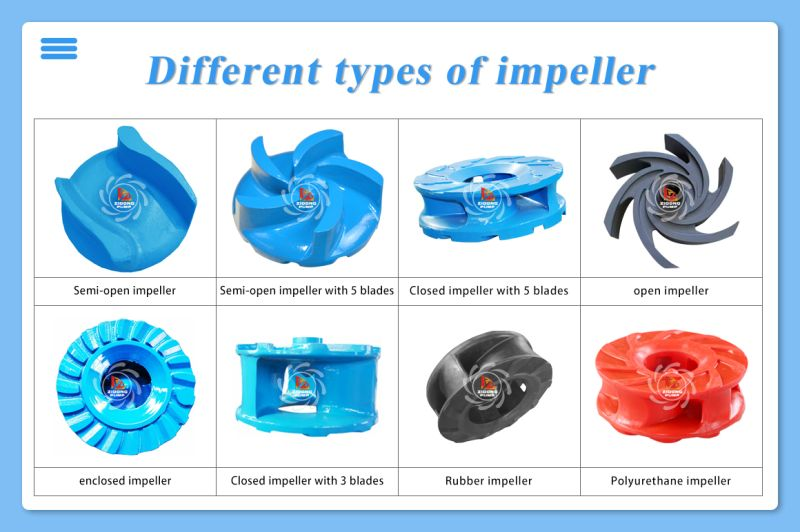
Impelers are available in several configurations designed to meet different operational requirements. Closed impellers feature blades enclosed by front and rear shrouds, making them highly efficient for clean liquids with minimal suspended solids. Their enclosed construction minimizes leakage losses and provides superior hydraulic performance in many industrial pumping applications.
Open impelers have exposed vanes without protective shrouds, allowing them to handle liquids containing suspended particles, fibers, or abrasive materials. Semi-open impellers combine characteristics of both designs by including a single shroud, offering a balance between efficiency and solids handling capability. These designs are widely used in wastewater treatment, food processing, and chemical industries where fluid contamination is common.
Flow direction also determines impeller classification. Radial flow impelers discharge fluid perpendicular to the shaft and are commonly found in centrifugal pumps requiring high pressure. Axial flow impellers move fluid parallel to the shaft, making them ideal for high-flow, low-pressure applications such as flood control and irrigation. Mixed-flow impelers combine radial and axial movement, providing balanced pressure and flow characteristics suitable for municipal water supply, cooling systems, and industrial circulation.
Materials Used to Manufacture High-Performance Impellers
Selecting the proper impeler material is essential for ensuring durability, corrosion resistance, wear protection, and long service life. Cast iron remains one of the most widely used materials because it offers excellent strength, affordability, and good performance in general water pumping applications. Stainless steel impelers provide superior corrosion resistance, making them ideal for food processing, pharmaceuticals, marine environments, and chemical handling.
Bronze impelers are frequently used in seawater applications because they resist saltwater corrosion while maintaining mechanical strength. Duplex stainless steel, nickel alloys, titanium, and high-performance engineered plastics are selected for highly aggressive chemical environments where conventional metals would deteriorate rapidly. Composite materials are also becoming increasingly popular due to their lightweight construction and excellent corrosion resistance.
Modern manufacturing technologies such as CNC machining, precision casting, investment casting, laser scanning, and additive manufacturing have significantly improved impeler quality. These advanced production methods enable manufacturers to produce highly accurate blade geometries, tighter dimensional tolerances, smoother surface finishes, and optimized hydraulic profiles that increase efficiency while reducing vibration and energy consumption.
Industrial Applications of Impellers Across Multiple Sectors
Impellers serve an enormous range of industries because virtually every fluid-handling process depends on efficient flow generation. Municipal water supply systems use impellers to transport drinking water from reservoirs to treatment plants and distribution networks. Wastewater treatment facilities rely on specialized impelers to move sewage, sludge, and contaminated water through multiple treatment stages while resisting clogging and abrasion.
Chemical processing plants utilize corrosion-resistant impelers to transfer acids, solvents, alkalis, and specialty chemicals safely and efficiently. In the oil and gas industry, impellers support drilling operations, crude oil transportation, refinery processes, cooling systems, and offshore production facilities. Mining companies depend on heavy-duty slurry impellers capable of handling abrasive mixtures containing sand, rock particles, and mineral concentrates.
Beyond industrial manufacturing, impelers play a vital role in agriculture, HVAC systems, marine propulsion, power generation, pharmaceuticals, food production, beverage processing, pulp and paper manufacturing, aquaculture, desalination plants, fire protection systems, swimming pool circulation, and renewable energy facilities. Their adaptability demonstrates the importance of proper impeler engineering across virtually every modern economy.
Factors That Affect Impeller Performance and Efficiency
Several engineering variables determine how efficiently an impeller performs during operation. Rotational speed has a direct influence on flow rate, pressure generation, and energy consumption. Operating beyond the recommended speed may increase wear, vibration, and cavitation, while insufficient speed can reduce hydraulic performance and overall system capacity. Engineers carefully match motor speed with impeler diameter to achieve optimal operating conditions.
Fluid properties also affect impeler behavior. Highly viscous liquids require different impeler designs than low-viscosity fluids because resistance to flow changes the hydraulic loading on the blades. Liquids containing suspended solids, fibrous materials, gases, or abrasive particles demand specialized impeler geometries that minimize clogging while maintaining efficient flow characteristics.
System design contributes significantly to impeller efficiency as well. Proper pipe sizing, suction conditions, pump alignment, bearing health, and seal integrity all influence overall performance. Maintaining operation near the pump’s best efficiency point reduces mechanical stress, lowers electricity consumption, extends component lifespan, and minimizes maintenance costs throughout the equipment’s operating life.
Common Impeller Problems, Maintenance, and Troubleshooting
Despite their robust construction, impellers experience wear over time due to continuous exposure to mechanical forces and challenging operating environments. Cavitation is one of the most common issues, occurring when vapor bubbles form and collapse near the impeller surface. This phenomenon causes pitting, erosion, vibration, excessive noise, and reduced pumping efficiency. Preventing cavitation requires maintaining adequate suction conditions and operating within recommended system parameters.
Corrosion and abrasion are additional concerns, particularly in systems handling chemicals, seawater, wastewater, or mineral slurries. Material selection plays a crucial role in minimizing damage, while protective coatings and surface treatments can further improve durability. Regular inspections help identify blade wear, cracking, imbalance, and erosion before severe damage develops.
Routine maintenance includes monitoring vibration levels, checking shaft alignment, inspecting bearings and seals, measuring pump performance, and cleaning accumulated debris from impeller passages. Predictive maintenance technologies such as vibration analysis, thermal imaging, ultrasonic testing, and condition monitoring enable maintenance teams to identify early signs of failure, reducing unexpected downtime and extending equipment service life.
Choosing the Right Impeller for Your Application
Selecting the appropriate impeller begins with understanding the specific operating requirements of the application. Engineers evaluate flow rate, total dynamic head, fluid viscosity, temperature, density, chemical compatibility, solids concentration, and operating pressure before determining the optimal impeler design. Matching these factors ensures efficient fluid movement while minimizing wear and energy consumption.
Pump manufacturers also consider suction conditions, available net positive suction head, motor characteristics, rotational speed, and expected operating cycle. In many industrial systems, even a slight mismatch between the impeler and process requirements can reduce efficiency, increase maintenance frequency, and shorten equipment lifespan. Careful hydraulic calculations and performance testing help optimize system reliability before installation.
Advances in computational fluid dynamics, digital modeling, and simulation software now allow engineers to predict impeler performance with exceptional accuracy before manufacturing begins. Combined with precision machining and quality control, these technologies enable customized impeler solutions that maximize efficiency while meeting increasingly demanding environmental, safety, and energy-efficiency standards.
The Future of Impeller Technology and Final Thoughts
Impeller technology continues to evolve as industries seek greater efficiency, sustainability, and operational reliability. Modern research focuses on advanced blade geometries, lightweight composite materials, additive manufacturing, smart sensors, digital twins, and artificial intelligence for predictive maintenance. These innovations help reduce energy consumption, improve hydraulic performance, and extend equipment operating life while lowering maintenance costs.
Growing emphasis on environmental sustainability has also encouraged the development of high-efficiency impellers designed to minimize electricity usage in pumping systems, which account for a significant portion of industrial energy consumption worldwide. Improved hydraulic optimization, corrosion-resistant materials, and precision manufacturing are enabling pumps to deliver higher performance while reducing emissions associated with power generation.
In conclusion, the impeler remains one of the most essential mechanical components in modern fluid engineering. From municipal water systems and industrial manufacturing to marine propulsion and renewable energy, impellers enable efficient movement of liquids and gases across countless applications. Understanding how impellers work, selecting the correct design and material, and following proper maintenance practices are fundamental to achieving reliable performance, reduced operating costs, and long-term equipment durability. As engineering technologies continue advancing, impellers will remain at the center of efficient fluid handling solutions for industries around the world.
