

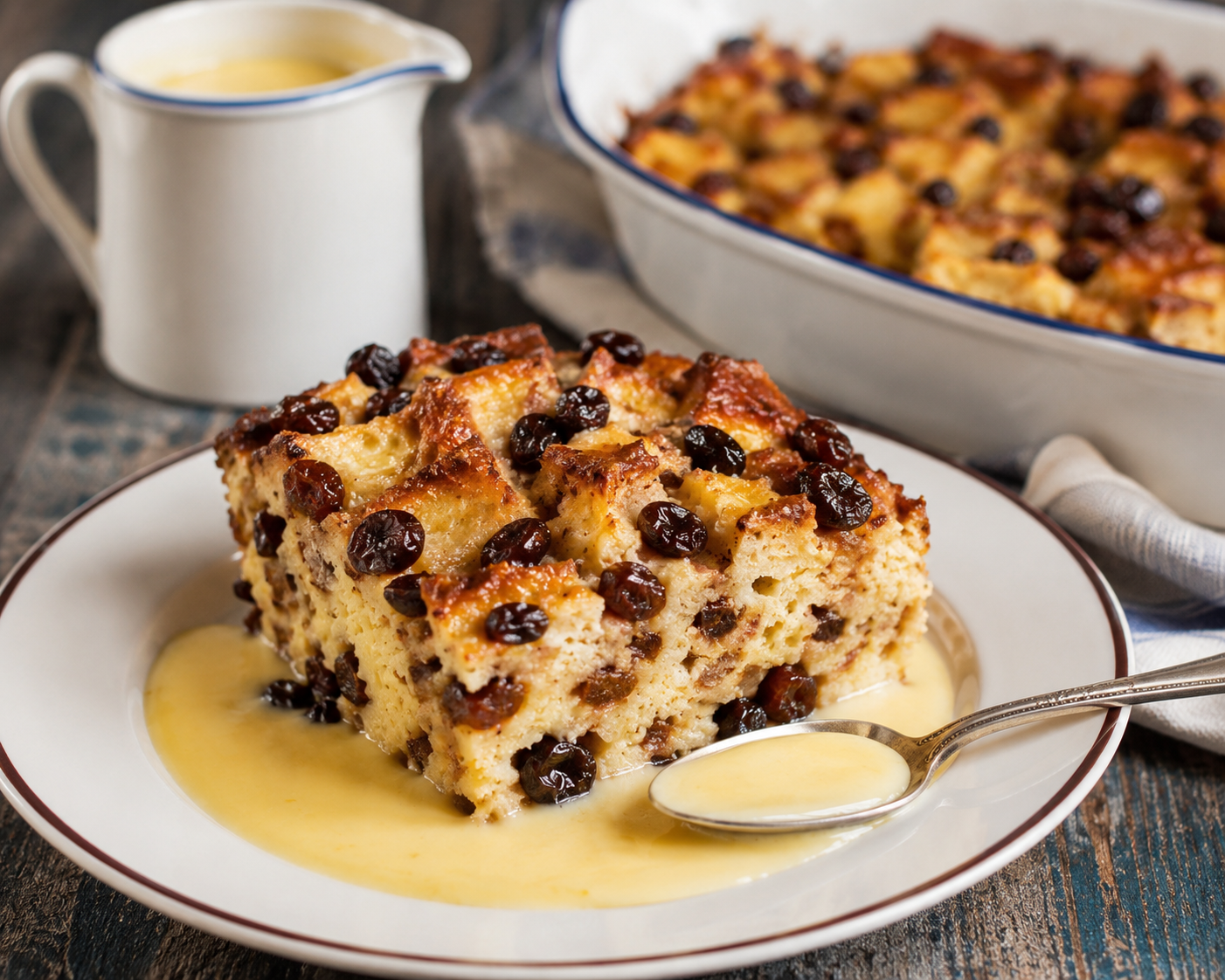
Few desserts capture the warmth and comfort of traditional British cooking quite like English bread pudding. Rich, hearty, and packed with flavor, this classic treat has been enjoyed in homes across England for centuries. Made from simple ingredients such as stale bread, dried fruits, spices, and eggs, English bread pudding is a shining example of how humble ingredients can be transformed into something truly delicious.
Unlike many modern desserts that rely on expensive ingredients or complicated techniques, English bread pudding celebrates simplicity. It is economical, easy to make, and deeply rooted in British culinary history. Whether served as a cozy family dessert, a teatime treat, or a nostalgic reminder of childhood, English bread pudding continues to hold a special place in the hearts of many.
In this article, we will explore the history of English bread pudding, its ingredients, preparation methods, variations, serving suggestions, nutritional aspects, and tips for creating the perfect pudding every time.
The History of English Bread Pudding
English bread pudding has its origins in medieval England, where resourcefulness in the kitchen was essential. During a time when food waste was unacceptable, cooks found creative ways to use stale bread rather than throwing it away.
Early versions of bread pudding were often referred to as “poor man’s pudding” because they utilized leftover bread combined with milk, eggs, and sweeteners. Over time, as ingredients such as sugar, dried fruits, and spices became more widely available, the recipe evolved into a richer and more flavorful dessert.
By the Victorian era, bread pudding had become a common household favorite throughout Britain. Families often prepared it on weekends or special occasions, using whatever ingredients were available. The dessert became particularly popular because it was filling, affordable, and could feed large families.
Today, English bread pudding remains a cherished traditional dish, often passed down through generations as a treasured family recipe.
What Makes English Bread Pudding Unique?
Many cultures have their own versions of bread pudding, but the English version has several distinctive characteristics.
Dense and Rich Texture
Unlike some bread puddings that are soft and custard-like, traditional English bread pudding tends to have a denser texture. The bread is thoroughly soaked and mixed into a thick batter-like consistency before baking.
Dried Fruit Abundance
English bread pudding typically includes generous amounts of raisins, currants, or sultanas. These fruits add sweetness and texture while contributing to the pudding’s traditional character.
Warm Spices
Nutmeg, cinnamon, and mixed spice are commonly used, creating the comforting aroma associated with classic British baking.
Moist Yet Firm Structure
The finished pudding is moist and rich but sturdy enough to be sliced into squares, making it suitable for serving at tea time or packing into lunchboxes.
Essential Ingredients
The beauty of English bread pudding lies in its simple ingredient list.
Bread
Stale bread works best because it absorbs liquid more effectively. Traditional recipes often use:
- White bread
- Wholemeal bread
- Sandwich loaves
- Day-old bread rolls
Milk
Milk softens the bread and forms the base of the pudding mixture. Whole milk is typically preferred for a richer result.
Eggs
Eggs bind the ingredients together and contribute to the pudding’s structure.
Sugar
Brown sugar or caster sugar provides sweetness and depth of flavor.
Dried Fruits
Common options include:
- Raisins
- Currants
- Sultanas
- Mixed dried fruits
Butter
Butter adds richness and improves texture.
Spices
Traditional spices include:
- Cinnamon
- Nutmeg
- Mixed spice
Optional Additions
Some recipes may include:
- Lemon zest
- Orange zest
- Vanilla extract
- Candied peel
- Chopped nuts
Traditional English Bread Pudding Recipe
Ingredients
- 8 cups stale bread, torn into pieces
- 2 cups milk
- 3 large eggs
- 1 cup brown sugar
- 1 cup raisins or sultanas
- 1 teaspoon cinnamon
- ½ teaspoon nutmeg
- 4 tablespoons melted butter
- 1 teaspoon vanilla extract
- Pinch of salt
Instructions
Step 1: Soak the Bread
Place the stale bread in a large bowl and pour the milk over it. Allow it to soak for approximately 30 minutes until softened.
Step 2: Mash the Mixture
Use a fork or potato masher to break down the bread into a thick consistency.
Step 3: Add Remaining Ingredients
Mix in:
- Eggs
- Sugar
- Butter
- Raisins
- Spices
- Vanilla
- Salt
Stir thoroughly until everything is evenly combined.
Step 4: Prepare the Baking Dish
Grease a baking dish and pour the mixture into it. Spread evenly.
Step 5: Bake
Bake at 350°F (175°C) for 45 to 60 minutes, or until the pudding is golden brown and firm.
Step 6: Cool and Serve
Allow the pudding to cool slightly before slicing and serving.
The Difference Between Bread Pudding and Bread and Butter Pudding
Many people confuse English bread pudding with bread and butter pudding, but they are distinct desserts.
English Bread Pudding
- Bread is broken apart and mixed.
- Dense texture.
- Large quantity of dried fruit.
- Cut into slices or squares.
Bread and Butter Pudding
- Bread slices remain intact.
- Butter spread between layers.
- Custard poured over bread.
- Softer and more custard-like texture.
Both are beloved British desserts, but English bread pudding is generally heartier and more substantial.
Popular Variations
Over the years, many delicious variations of English bread pudding have emerged.
Chocolate Bread Pudding
Adding chocolate chips or cocoa powder creates a richer, more indulgent dessert.
Apple Bread Pudding
Fresh apple chunks provide natural sweetness and a pleasant contrast in texture.
Lemon Bread Pudding
Lemon zest adds brightness and freshness.
Orange and Raisin Bread Pudding
Orange zest pairs beautifully with traditional dried fruits.
Rum-Soaked Bread Pudding
Some recipes incorporate rum-soaked raisins for a deeper flavor profile.
Nutty Bread Pudding
Walnuts, pecans, or almonds add crunch and complexity.
Tips for Perfect English Bread Pudding
Use Stale Bread
Fresh bread may become too soft. Slightly stale bread absorbs liquid more effectively.
Soak Thoroughly
Allow enough time for the bread to fully absorb the milk.
Don’t Skip the Spices
Traditional spices contribute significantly to the pudding’s characteristic flavor.
Use Quality Dried Fruits
Good-quality raisins and currants make a noticeable difference.
Avoid Overbaking
Overbaking can cause the pudding to become dry. Remove it once the center is set.
Let It Rest
Allowing the pudding to cool slightly helps improve texture and makes slicing easier.
Serving Suggestions
English bread pudding can be enjoyed in numerous ways.
Warm with Custard
Traditional British custard is one of the most popular accompaniments.
With Cream
A dollop of fresh cream complements the rich pudding beautifully.
Ice Cream
Vanilla ice cream creates a delightful hot-and-cold contrast.
Fruit Sauce
Berry compotes and fruit sauces add freshness and balance.
Tea Time Treat
Serve sliced bread pudding alongside a cup of tea for a classic British experience.
Why English Bread Pudding Remains Popular
Several factors contribute to the enduring popularity of English bread pudding.
Economical
The recipe uses affordable pantry staples.
Reduces Food Waste
It provides an excellent use for leftover bread.
Easy to Prepare
Even beginner bakers can successfully make bread pudding.
Comforting Flavor
Warm spices and dried fruits create a nostalgic, comforting taste.
Versatile
The recipe can be customized with countless flavor variations.
Suitable for Gatherings
Large batches make it ideal for family meals and celebrations.
Nutritional Overview
The nutritional content depends on the specific ingredients used.
A typical serving may contain:
- Calories: 250–400
- Protein: 5–8 grams
- Carbohydrates: 35–50 grams
- Fat: 8–15 grams
- Fiber: 2–4 grams
To make a lighter version:
- Use reduced-fat milk
- Reduce sugar
- Increase fruit content
- Use whole-grain bread
Storage and Reheating
Refrigeration
Store bread pudding in an airtight container in the refrigerator for up to five days.
Freezing
Bread pudding freezes well for up to three months. Wrap portions individually for convenience.
Reheating
Reheat in:
- Microwave
- Oven
- Air fryer
Adding a splash of milk before reheating can help restore moisture.
English Bread Pudding Around the World
While rooted in Britain, bread pudding has inspired numerous international variations.
United States
American bread pudding often includes rich custard and sweet sauces.
Ireland
Irish versions frequently incorporate whiskey or cream.
Australia
Australian bread pudding closely resembles traditional British recipes.
Caribbean
Caribbean variations may feature tropical fruits, coconut, and rum.
South Africa
Many South African bread puddings include local spices and dried fruits.
Despite regional differences, the core concept remains the same: transforming leftover bread into a delicious dessert.
Common Mistakes to Avoid
Using Too Much Liquid
Excess liquid can create a soggy pudding.
Insufficient Soaking
Dry bread pieces may remain unpleasantly firm.
Overmixing
Excessive mixing can negatively affect texture.
Skipping Fruit
Dried fruit contributes significantly to traditional flavor.
Incorrect Baking Temperature
Too high a temperature may burn the exterior before the center is fully cooked.
The Role of Bread Pudding in British Food Culture
English bread pudding represents more than just dessert. It reflects values deeply embedded in British cooking traditions:
- Resourcefulness
- Practicality
- Comfort
- Family connection
- Preservation of culinary heritage
Many families maintain cherished recipes passed down through generations, each with unique twists and personal touches.
In community bake sales, church gatherings, and family celebrations, bread pudding continues to evoke feelings of nostalgia and warmth.
Modern Interpretations
Contemporary chefs have reinvented English bread pudding in creative ways while respecting its traditional roots.
Modern adaptations include:
- Salted caramel bread pudding
- Espresso-infused versions
- Brioche bread pudding
- Vegan bread pudding
- Gluten-free alternatives
- Gourmet restaurant presentations
These innovations demonstrate the dessert’s remarkable adaptability.
Conclusion
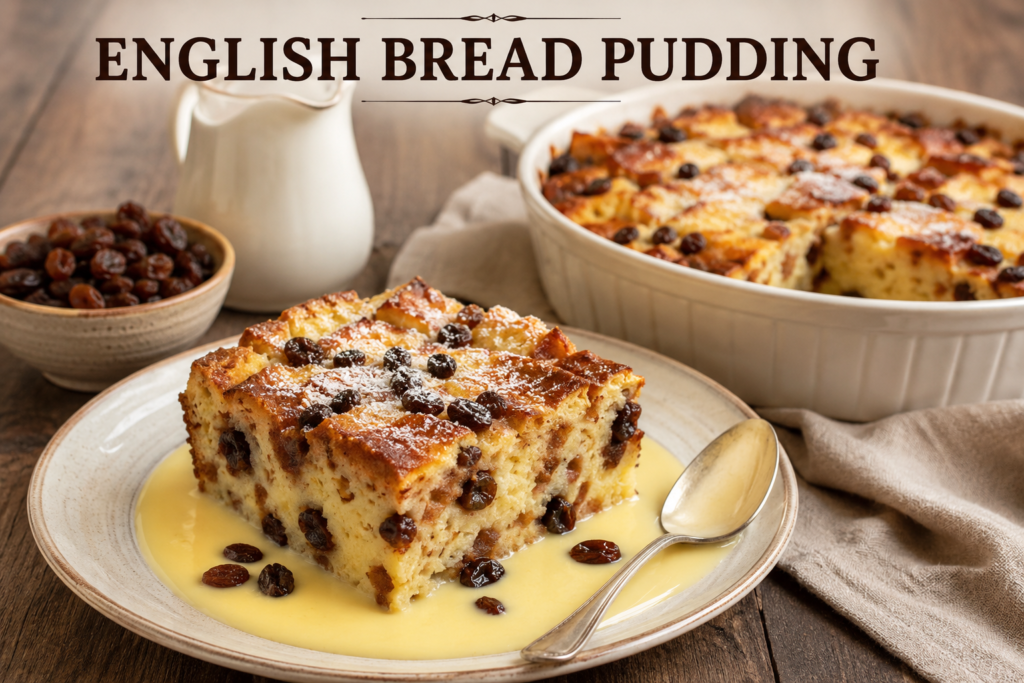
English bread pudding is a timeless dessert that showcases the best of traditional British home cooking. Made from simple ingredients and born from a desire to reduce waste, it has evolved into a beloved classic enjoyed by generations. Its rich texture, sweet dried fruits, warming spices, and comforting flavors make it a standout among traditional desserts.
Whether prepared according to a centuries-old family recipe or adapted with modern ingredients, English bread pudding continues to deliver warmth, satisfaction, and nostalgia in every bite. Its enduring appeal lies not only in its delicious taste but also in the sense of history and tradition it carries. For anyone seeking a comforting homemade dessert with genuine British heritage, English bread pudding remains one of the finest choices available.
