

The indie horror scene has produced many unforgettable experiences over the last decade, scanner sombre but few titles have embraced minimalism and psychological tension as effectively as scanner sombre. Rather than relying on jump scares, loud soundtracks, or fast-paced action, this unique game creates fear through darkness, isolation, and discovery. It strips away traditional visual clarity and replaces it with uncertainty, asking players to move forward into the unknown with only a scanning device as their guide.
This article explores the origins, gameplay mechanics, artistic design, themes, emotional impact, and lasting influence of scanner sombre. Whether you are a horror enthusiast, a game design student, or simply curious about experimental indie titles, this comprehensive guide will provide deep insight into what makes this experience so distinctive.
The Origins of Scanner Sombre
Developed by Introversion Software, the studio behind titles like Darwinia and Prison Architect, scanner sombre was released as an experimental first-person exploration game. Known for their innovative design philosophy, Introversion sought to create something smaller in scale but emotionally powerful.
Unlike mainstream horror titles that focus on monsters and combat systems, this project emphasized atmosphere and psychological immersion. It was developed during a period when indie studios were exploring unconventional storytelling methods, particularly in the horror genre.
The name itself reflects its tone. “Scanner” references the primary mechanic players use to navigate the environment, while “sombre” captures the dark, reflective mood of the experience.
Core Gameplay Mechanics
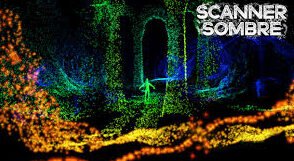
At its heart, scanner sombre is an exploration-based experience set inside a vast cave system. Players assume the role of an explorer equipped with a handheld LIDAR scanner. This device emits pulses that briefly illuminate the surroundings in a cloud of colored dots.
Navigating Through Darkness
The caves are initially pitch black. Without scanning, the player sees almost nothing. Each pulse reveals fragments of walls, pathways, and objects, creating a temporary visual map. However, the dots fade quickly, forcing players to keep scanning if they want to maintain spatial awareness.
This mechanic achieves several effects:
- Encourages slow, cautious movement
- Builds tension through limited visibility
- Creates uncertainty about what lies ahead
- Produces stunning visual patterns
The reliance on scanning transforms navigation into a deliberate act. You are not simply walking through a cave; you are uncovering it piece by piece.
Environmental Interaction
There are no weapons, no traditional enemies, and no combat mechanics. Interaction is limited to exploration and environmental triggers. The focus remains on atmosphere and discovery rather than survival mechanics.
This minimalism heightens immersion. Without distractions, players become deeply aware of their surroundings, sounds, and internal reactions.
Visual Design and Artistic Innovation
One of the most remarkable aspects of scanner sombre is its visual style. The use of LIDAR-inspired scanning technology creates a point-cloud aesthetic rarely seen in video games.
The Point-Cloud Effect
Instead of rendering solid textures, the environment appears as thousands of floating dots. These dots briefly form recognizable shapes—rock formations, tunnels, ladders—before fading back into darkness.
The result is:
- A surreal, almost dreamlike visual experience
- Constant motion as new scans overlay previous ones
- A haunting blend of beauty and fear
As players progress deeper into the caves, the color palette evolves. Early sections use simple white scans, but later areas introduce vibrant hues like blue, green, and red, intensifying the atmosphere.
Lighting as a Narrative Tool
Light is not constant; it is earned through scanning. This mechanic subtly reinforces the game’s themes of discovery and vulnerability. Each flash of light feels temporary, fragile, and insufficient.
Unlike traditional horror games that use shadows to conceal threats, scanner sombre uses darkness as an almost physical presence. The absence of visibility becomes the primary source of tension.
Sound Design and Psychological Impact
Sound plays a crucial role in shaping the emotional experience. With limited visual clarity, players rely heavily on audio cues.
Ambient Audio
The cave environment includes:
- Echoing footsteps
- Distant dripping water
- Subtle rumbling
- Occasional unsettling noises
These sounds create the illusion of depth and scale. The cave feels enormous and alive, even when nothing visibly moves.
Isolation and Internal Fear
Because there are no obvious enemies, fear emerges from anticipation. The player’s imagination fills in the gaps left by darkness. This psychological approach often proves more effective than scripted scares.
Silence is used strategically. Long stretches without significant sound amplify tension. When something does happen—whether visual or auditory—it feels amplified.
Themes and Symbolism
Beyond mechanics, scanner sombre explores deeper themes.
Exploration and Curiosity
At its core, the game is about venturing into the unknown. The cave symbolizes unexplored territory, both physical and psychological. The act of scanning mirrors humanity’s desire to illuminate and understand the darkness.
Vulnerability
The player is entirely defenseless. There are no tools for protection, only tools for perception. This vulnerability fosters emotional investment and empathy.
Reality and Perception
Because the environment exists only when scanned, reality feels unstable. What you see is incomplete, temporary, and subjective. This design choice subtly raises questions about how we perceive and interpret the world around us.
Narrative Structure
The storytelling in scanner sombre is minimal and environmental. Rather than delivering long dialogue sequences or cinematic cutscenes, the game reveals fragments of story through exploration.
Players uncover remnants of past events inside the cave. Without explicit exposition, the narrative unfolds gradually, encouraging interpretation rather than dictation.
This approach:
- Respects player intelligence
- Enhances mystery
- Encourages replayability
The lack of heavy storytelling allows players to project their own fears and theories onto the environment.
Emotional Journey of the Player
The experience evolves over time.
Initial Curiosity
At the beginning, players are intrigued by the scanning mechanic. The novelty of revealing the world through pulses creates excitement.
Rising Tension
As the cave system grows more complex, feelings shift from curiosity to unease. The deeper you travel, the more oppressive the darkness becomes.
Psychological Weight
Without traditional enemies, the mind becomes the antagonist. Every shadow-like shape created by fading scan points could be something—or nothing.
Reflection
After finishing the experience, many players report lingering thoughts about isolation and vulnerability. The game’s minimalist approach leaves room for personal interpretation.
Comparison With Other Indie Horror Titles
The indie horror genre includes many experimental projects, but scanner sombre stands apart in several ways.
- It avoids conventional jump scares.
- It emphasizes exploration over survival.
- It relies on innovative visual rendering rather than detailed textures.
- It uses psychological tension instead of direct threats.
While other games may focus on story-heavy narratives or puzzle mechanics, this experience prioritizes atmosphere above all else.
Technical Design and Performance
From a technical perspective, the LIDAR-inspired rendering system is impressive. Simulating thousands of point-cloud particles in real time requires careful optimization.
The engine ensures:
- Smooth frame rates
- Responsive scanning mechanics
- Gradual color transitions
- Stable performance on modest hardware
The design demonstrates that strong atmosphere does not require hyper-realistic graphics. Creative implementation can achieve greater emotional impact than visual fidelity alone.
Why Scanner Sombre Still Matters
Even years after release, scanner sombre remains relevant for several reasons.
Innovation in Minimalism
It proves that limitation can inspire creativity. By removing common horror elements, the developers crafted a unique emotional experience.
Educational Value
Game design students often study it as an example of:
- Environmental storytelling
- Atmospheric tension
- Non-traditional rendering techniques
- Emotional pacing
Replay Value
Though relatively short, the experience invites multiple playthroughs. Players may notice subtle environmental details they missed before.
Tips for First-Time Players
If you plan to explore scanner sombre, consider the following suggestions:
- Play in a dark room – External light reduces immersion.
- Use headphones – Sound is critical to the experience.
- Move slowly – Rushing diminishes tension and detail.
- Allow yourself to feel uncomfortable – The discomfort is intentional.
Approaching the game with patience enhances its impact.
The Role of Technology in Horror Evolution
The success of scanner sombre highlights a broader trend in interactive media: technology can shape emotion in unexpected ways.
LIDAR scanning is used in real-world mapping and research. By adapting it for entertainment, the developers blurred the line between scientific tool and artistic expression.
This fusion demonstrates how technical concepts can inspire new storytelling methods.
Community Reception and Critical Response
Upon release, the game received praise for originality and atmosphere. Critics admired its bold design decisions, while some players found its minimalism either refreshing or challenging.
Common positive feedback included:
- Unique visual identity
- Deep psychological tension
- Memorable sound design
Criticisms generally focused on:
- Short runtime
- Limited interactivity
- Slow pacing
However, even critics acknowledged its artistic ambition.
Lessons for Aspiring Developers
There are several key takeaways from scanner sombre:
1. Innovation Over Imitation
Rather than copying mainstream horror formulas, the developers embraced experimentation.
2. Atmosphere Can Replace Complexity
Deep emotional engagement does not require complex systems. A single well-designed mechanic can carry an entire experience.
3. Trust the Player
Minimal guidance encourages curiosity and interpretation.
Psychological Horror Versus Physical Horror
Traditional horror often relies on visible threats. Scanner sombre demonstrates the power of psychological horror.
Physical horror includes:
- Monsters
- Violence
- Chase sequences
Psychological horror relies on:
- Atmosphere
- Uncertainty
- Suggestion
The latter often leaves a stronger, longer-lasting impression because it engages the imagination.
The Power of Darkness in Interactive Media
Darkness is more than absence of light. In interactive experiences, it becomes an active design element.
In scanner sombre, darkness:
- Shapes navigation
- Controls pacing
- Amplifies sound
- Encourages imagination
Few games utilize darkness so deliberately and effectively.
Cultural and Artistic Significance
Though not a mainstream blockbuster, scanner sombre contributes to the broader artistic conversation about what video games can be.
It challenges assumptions about:
- Visual clarity
- Narrative structure
- Player empowerment
By removing traditional power fantasies, it emphasizes vulnerability and introspection.
Future of Experimental Horror Games
The success of projects like scanner sombre suggests a promising future for experimental horror.
Developers continue exploring:
- Minimalist design
- Unique rendering styles
- Psychological storytelling
- Short-form narrative experiences
As technology evolves, we can expect even more innovative approaches to atmosphere-driven gameplay.
Final Thoughts
Scanner sombre stands as a testament to the power of creative restraint. Through its innovative scanning mechanic, haunting sound design, and minimalist storytelling, it delivers a deeply immersive psychological experience.
It does not rely on monsters, weapons, or complex systems. Instead, it places players alone in darkness with only a scanning device and their own imagination. This simplicity becomes its greatest strength.
For those seeking a different kind of horror—one rooted in atmosphere, uncertainty, and quiet tension—scanner sombre offers an unforgettable journey into the unknown.
Frequently Asked Questions
What type of game is scanner sombre?
It is a first-person exploration horror experience focused on atmosphere and environmental storytelling.
Is it combat-based?
No. There are no traditional combat mechanics.
How long does it take to complete?
Most players finish it within a few hours.
What makes it unique?
Its LIDAR-inspired scanning system and point-cloud visual style create a one-of-a-kind aesthetic.
In a gaming landscape filled with loud, action-heavy horror titles, scanner sombre remains a quiet yet powerful reminder that fear often thrives in darkness—and sometimes, what we cannot fully see is far more terrifying than what stands clearly before us.
READ MORE: UPLOAD ARTICLES
