

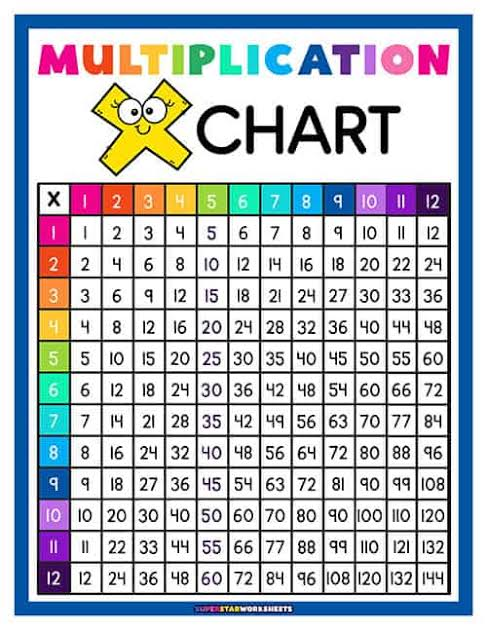
A printable multiplication chart is one of the most useful educational resources for children, students, parents, and teachers. It provides an organised display of multiplication facts in a simple grid, making it easier to understand, practise, and memorise times tables. Whether a child is learning basic multiplication for the first time or an older student needs extra practice, a multiplication chart can make mathematics easier and more enjoyable.
printable multiplication chart is an important mathematical skill that students use throughout their education. From solving simple classroom exercises to working with fractions, division, percentages, and more advanced calculations, understanding multiplication facts helps build a strong foundation. However, memorising every multiplication table can sometimes feel difficult, especially for young learners. A printable multiplication chart provides a visual reference that helps students recognise number patterns and understand how multiplication works.
One of the biggest advantages of printable multiplication charts is their convenience. Parents and teachers can download and print them for classroom activities, homework, revision sessions, or daily practice. Students can keep a copy in their notebooks, school bags, or study areas and use it whenever they need help with multiplication.
Quick Facts About Printable Multiplication Charts
| Feature | Details |
|---|---|
| Resource Name | Printable Multiplication Chart |
| Category | Mathematics Worksheets |
| Main Purpose | Learning multiplication tables |
| Primary Users | Students, Teachers, Parents |
| Common Range | 1 to 10 and 1 to 12 |
| Printable Format | PDF and Image |
| Learning Level | Elementary and Primary |
| Main Benefits | Number Recognition and Calculation |
| Common Uses | Homework and Classroom Practice |
| Difficulty | Beginner to Advanced |
What Is a Printable Multiplication Chart?
A printable multiplication chart is a mathematical reference sheet that displays multiplication facts in rows and columns. Each row and column represents a number, and the number where they meet shows the multiplication result. For example, when a student finds the row for 4 and the column for 5, the intersecting box displays 20 because 4 multiplied by 5 equals 20. printable multiplication chart.
These charts are designed to make multiplication easier to understand visually. Instead of memorising every calculation separately, students can examine the grid and identify relationships between numbers. A chart can also help learners recognise repeated patterns, such as multiples of 2, 5, and 10. printable multiplication chart.
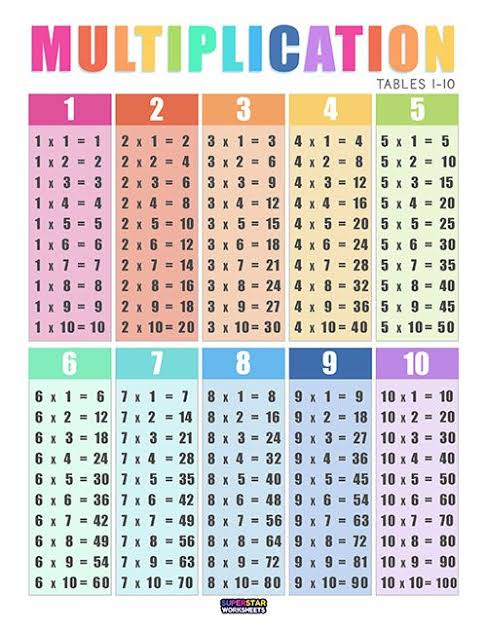
Printable multiplication charts are available in different layouts and sizes. Some display multiplication facts from 1 to 10, while others extend to 12, 15, or even 20. There are also colourful charts, black-and-white versions, blank grids, and worksheets designed for specific learning levels. This variety allows teachers and parents to select a suitable resource for each child. printable multiplication chart.
Benefits of Using a Multiplication Chart
One major benefit of using a multiplication chart is that it helps students develop confidence in mathematics. Children who struggle to remember multiplication facts can use the chart as a visual guide while completing their exercises. Having the answers organised in one place reduces frustration and allows them to focus on understanding the calculation. printable multiplication chart.
Another important advantage is improved number recognition. When students regularly examine multiplication charts, they begin to notice how numbers are connected. For example, they can see that multiplying a number by 2 produces even numbers and multiplying by 10 adds a zero to whole-number results. These patterns help make multiplication easier to understand. printable multiplication chart.
A multiplication chart can also support independent learning. Students can use it without constantly asking teachers or parents for assistance. Over time, repeated practice helps them remember common multiplication facts. Although the chart is useful as a reference, combining it with mental mathematics exercises and regular revision can produce better learning results. printable multiplication chart.
Different Types of Printable Multiplication Charts
Printable multiplication charts come in several formats to support different learning needs. The standard multiplication chart is one of the most common options. It usually contains a grid showing multiplication facts from 1 to 10 or 1 to 12. Students can use this chart to check answers and practise basic multiplication.
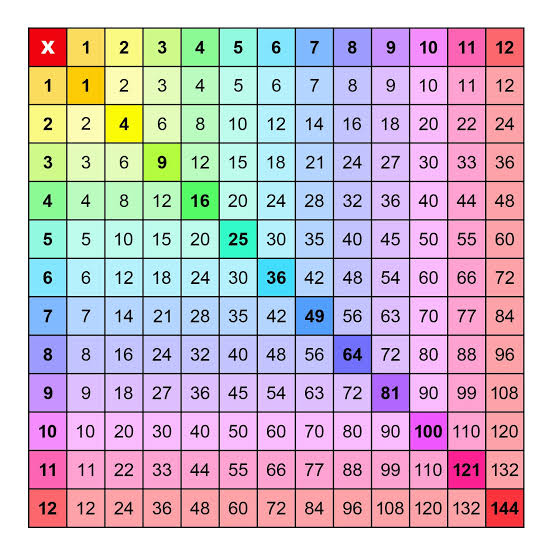
A colourful multiplication chart is another popular option, especially for younger children. Different rows or number groups may use different colours to make the information easier to follow. Bright designs can make mathematics worksheets more attractive and encourage children to spend more time practising.
Blank multiplication charts are also useful for educational activities. Unlike completed charts, these worksheets contain empty boxes that students must fill in themselves. They are particularly effective for testing multiplication knowledge and identifying areas that need additional practice. Some worksheets also include partially completed grids, giving learners a mixture of guidance and independent problem-solving.
How to Use a Printable Multiplication Chart
Using a printable multiplication chart is simple. First, download a suitable chart and print it on standard paper. A clear and readable design is important because students need to identify rows, columns, and multiplication results easily. Once printed, place the chart somewhere convenient, such as a study desk, classroom wall, or mathematics notebook.
To find a multiplication answer, locate the first number along the left side of the grid and the second number along the top. Follow the corresponding row and column until they meet. The number in that box is the answer. For example, to calculate 6 × 7, find row 6 and column 7. Their intersection shows 42.
Students should practise using the chart with different multiplication questions. Parents can ask simple questions and encourage children to find the answers independently. Teachers can also use the chart during classroom demonstrations to explain how multiplication facts are organised. With regular practice, learners gradually become more familiar with the numbers and need less assistance from the chart.
Printable Multiplication Charts for Kids
Children benefit from multiplication charts because they provide a simple and visual way to explore mathematical relationships. Young learners may initially find multiplication confusing, especially when they are introduced to larger numbers. A chart breaks information into smaller sections and makes it easier to understand how repeated addition connects with multiplication.
For beginners, a chart covering numbers 1 through 5 can be a good starting point. Children can practise simple facts before moving towards the 6, 7, 8, 9, and 10 times tables. Once they become comfortable with these calculations, they can use a complete 1-to-12 multiplication chart for additional practice.
Parents can make learning more enjoyable by turning multiplication practice into small daily activities. For example, they can ask children to find three multiplication answers from the chart or identify all the multiples of a particular number. These short exercises encourage participation without making mathematics feel overwhelming. Teachers can also provide individual charts to students who need additional support during lessons.
Blank Multiplication Chart for Practice
A blank multiplication chart is an excellent resource for students who want to test their knowledge of times tables. It usually contains the numbers along the top and left sides, while the remaining boxes are empty. Students must calculate each multiplication fact and write the correct answer in the corresponding position.
This type of worksheet is particularly useful for revision and classroom assessments. Teachers can distribute blank charts during mathematics lessons to check how well students understand multiplication. Parents can also use them at home to monitor progress and identify multiplication facts that require more attention.
Students should begin with smaller sections instead of trying to complete an entire chart immediately. For example, they can fill in the 2, 3, and 4 times tables before moving to more challenging numbers. Completing the chart gradually helps learners build confidence and reduces the chances of becoming frustrated. Once the chart is finished, students can compare their answers with a completed multiplication chart.
Multiplication Chart From 1 to 12
A multiplication chart from 1 to 12 is one of the most widely used resources in elementary mathematics. It provides a complete collection of basic multiplication facts that students are generally expected to learn during their primary school years. The chart helps learners practise calculations and understand how multiplication changes as numbers increase.
The 1 times table is usually the easiest because multiplying any number by 1 gives the same number. The 2 times table introduces even numbers, while the 5 and 10 times tables help students recognise simple counting patterns. These familiar patterns provide a useful starting point before learners move towards more difficult multiplication facts.
The 6, 7, 8, 9, 11, and 12 times tables may require additional practice for some students. A complete chart allows learners to compare these multiplication facts and identify relationships between different number groups. For example, 4 × 6 and 6 × 4 both equal 24. Understanding this multiplication property helps students remember more facts with less effort.
How Teachers and Parents Can Use Multiplication Charts
Teachers can include printable multiplication charts in classroom lessons, mathematics worksheets, homework assignments, and revision activities. A chart can be displayed on a classroom wall so students can refer to it when solving multiplication problems. It can also be used during group activities where children work together to complete multiplication exercises.
Parents can support their children’s mathematical development by keeping a multiplication chart in the study area. They can encourage children to practise a few multiplication facts every day rather than attempting to memorise everything in one session. Short and regular practice sessions can make learning more manageable.
Another useful approach is to combine multiplication charts with real-life examples. Parents can ask children to calculate the total number of objects in several equal groups. For instance, if there are four boxes containing six pencils each, students can calculate 4 × 6 to find the total of 24 pencils. Connecting multiplication with everyday situations helps children understand why these mathematical skills are important.
Tips for Memorising Multiplication Tables Faster
Memorising multiplication tables becomes easier when students practise regularly and use different learning methods. One effective technique is to learn one multiplication table at a time. Students can begin with easier tables, such as 1, 2, 5, and 10, before moving towards more challenging calculations.
Another helpful strategy is recognising multiplication patterns. The 2 times table contains even numbers, the 5 times table ends in either 0 or 5, and the 10 times table follows a simple counting pattern. Students can also use the commutative property of multiplication to reduce the number of facts they need to memorise. For example, knowing 3 × 8 also helps them understand 8 × 3.
Flashcards, multiplication games, timed quizzes, and blank worksheets can make revision more interesting. Students should also review previously learned tables while studying new ones. Regular revision helps strengthen memory and makes it easier to recall multiplication facts during examinations and everyday calculations.
Why Printable Multiplication Charts Are Useful for Home Learning
Printable multiplication charts are valuable resources for home learning because they are easy to access and simple to use. Parents do not need specialised teaching equipment or expensive educational materials to introduce multiplication practice. A basic printed chart can provide students with a convenient reference whenever they work on mathematics assignments.
These charts are also useful for homeschooling families. Parents can include them in weekly mathematics lessons and create practice activities according to their children’s abilities. Younger children can begin with simple multiplication facts, while more advanced learners can work with larger charts and blank multiplication grids.
Another advantage is that printed charts do not require an internet connection or electronic device. Students can use them while travelling, studying at home, or completing classroom-style exercises. Keeping a printed copy nearby also encourages children to refer to mathematical information independently instead of relying entirely on calculators.
Conclusion
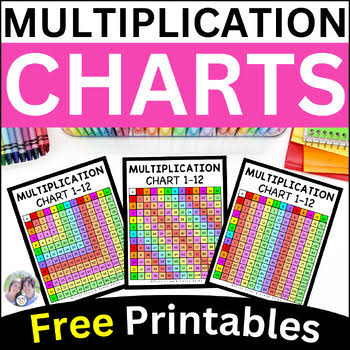
A printable multiplication chart is a simple but powerful educational resource that helps students understand, practise, and memorise multiplication facts. Its organised layout makes it easier to recognise number patterns, check calculations, and develop confidence in mathematics. From colourful charts for young children to blank grids for advanced practice, different formats can support a wide range of learning needs.
Teachers can use these charts to improve classroom activities, while parents can introduce them during homework and home learning sessions. Students can also keep a copy nearby for quick reference and regular revision. By combining multiplication charts with games, worksheets, and daily practice, learners can gradually develop stronger mathematical skills and become more confident when solving multiplication problems.
