

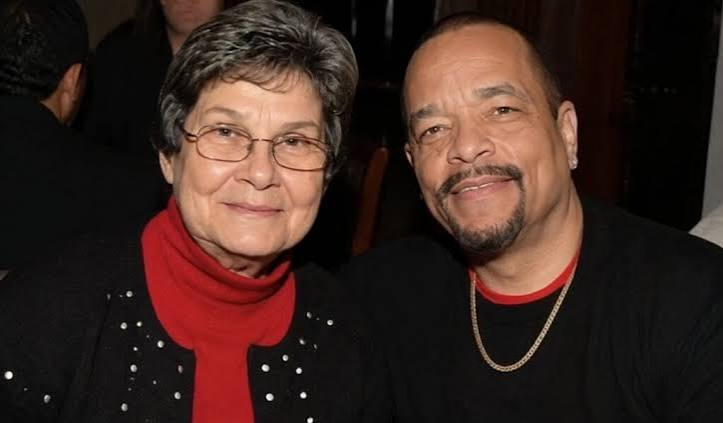
Alice Marrow is best remembered as the mother of Tracy Lauren Marrow, the influential rapper, actor, and television personality better known as Ice-T. Although Alice never became a public figure herself, her place in her son’s early life has made her an important part of Ice-T’s biography. She raised him during his childhood in New Jersey and gave him advice that he continued to remember long after her death. Her story is therefore closely connected with the childhood experiences that helped shape one of hip-hop’s most recognizable voices.
Public information about Alice Marrow is limited because she lived most of her life away from entertainment and media attention. The strongest biographical information comes from accounts of Ice-T’s early life, his own recollections, and established biographies. These sources consistently identify Alice as the wife of Solomon Marrow and the mother of Tracy, who was born in Newark, New Jersey, in 1958. Ice-T’s parents both died while he was still young, leaving a profound mark on his childhood and later outlook.
Some websites publish highly specific claims about Alice’s birth date, ancestry, and personal history, but not all of those details are supported by strong primary records. A careful biography should therefore separate information that can be traced to Ice-T’s own story from details that have simply been repeated online. What is clear is that Alice was a working-family mother whose influence remained meaningful to her son even after her life was cut short.
Alice Marrow’s Early Life and Family Background
Alice Marrow was an African American woman whose family roots were associated with Louisiana, according to accounts of Ice-T’s background. Ice-T has described his mother as a fair-skinned Black woman and his father, Solomon Marrow, as darker-skinned. Public biographies also connect Alice’s family history with Louisiana Creole heritage, although the precise details of her ancestry are not documented consistently enough to treat every online claim as established fact.
Some secondary sources give April 1909 as Alice’s birth date and Winston-Salem, North Carolina, as her birthplace, while others provide little or no verified information about her birth. Because there is no widely accessible authoritative biography of Alice herself, these details should be treated with appropriate caution. The more reliable part of the story is her connection to the Marrow family and her role in raising Tracy during his formative years.
Alice belonged to a generation shaped by major changes in African American life in the United States. Families from the South frequently moved toward northern cities in search of greater economic opportunities and different social conditions. The Marrow family eventually settled in New Jersey, where Alice and Solomon built a home for their son. Her story therefore sits within a much larger history of Black migration, family life, work, and community development during the twentieth century.
Alice Marrow and Her Husband Solomon Marrow
Alice Marrow was married to Solomon Marrow, who worked as a conveyor-belt mechanic for the Rapistan Conveyor Company. Ice-T’s biographies describe his father as a hardworking employee who provided a stable working-class foundation for the family. Solomon’s occupation was far removed from the entertainment industry his son would later enter, giving Tracy a childhood rooted in ordinary family and working life rather than celebrity culture.
Alice and Solomon’s family life centered on their son, Tracy Lauren Marrow. Tracy was born on February 16, 1958, in Newark, New Jersey. Public biographical sources consistently identify Alice and Solomon as his parents, and Ice-T has frequently discussed how the deaths of both affected him deeply.
The family later moved from Newark to Summit, New Jersey. That relocation exposed young Tracy to a very different social environment. According to accounts of Ice-T’s childhood, Summit was a predominantly white community, and his experiences there helped him become aware of racial differences at a young age. His mother’s response to one such experience became one of the most memorable lessons he carried from childhood.
Alice Marrow’s Influence on Young Ice-T
One of the most important stories associated with Alice Marrow concerns her response when young Tracy began noticing racism and differences in skin color. Ice-T has recalled an experience in which he became aware that some white children treated darker-skinned Black children differently. Because Tracy himself was lighter-skinned, he began thinking about why he was treated differently from some other Black children. His mother gave him a simple but memorable response: “Honey, people are stupid.”
That short statement became significant because it taught Tracy not to allow other people’s prejudice to define his self-worth. Ice-T has described the experience as an early lesson in dealing with racism. Rather than giving his young son an elaborate explanation, Alice encouraged him to understand that ignorance and prejudice were problems belonging to the people displaying them. Her response became part of the emotional foundation of his outlook.
Alice’s influence was not limited to a single conversation. She was the parent who helped establish Tracy’s earliest understanding of family, discipline, identity, and resilience. Although it would be many years before he became Ice-T, the experiences of his childhood remained part of the person who eventually developed into a pioneering hip-hop artist and actor.
Alice Marrow’s Louisiana Creole Heritage
The question of Alice Marrow’s ethnicity is often discussed because several biographies describe her as having Louisiana Creole roots. Louisiana Creole identity has a complicated history and can involve African, French, Spanish, Native American, and other cultural influences depending on the individual family. However, the available evidence about Alice does not justify assigning a detailed ancestry chart to her without qualification.
What can be stated with greater confidence is that Ice-T has identified his mother’s family as being from Louisiana and described his parents as African American. This background formed part of the cultural environment in which he was raised. His later career frequently explored race, identity, social inequality, and life in urban America, although it would be too simplistic to attribute those themes directly to one part of his family heritage.
Alice’s background also illustrates why family history can be difficult to reconstruct for people who were born more than a century ago. Records may be incomplete, family identities can be described differently across generations, and modern websites sometimes convert oral history into precise claims without showing their sources. For Alice Marrow, the safest approach is to recognize her Louisiana-associated heritage while avoiding unsupported certainty about every element of her ancestry.
Alice Marrow’s Life in Newark and Summit, New Jersey
Alice’s family spent part of its life in Newark before moving to Summit, New Jersey. Newark was an important industrial and cultural center, while Summit offered a different suburban environment. For young Tracy, the move had consequences beyond geography because he encountered racial dynamics that he had not fully understood before. Those childhood experiences became part of his later understanding of American society.
The Marrow household was not a celebrity household. Solomon worked a conventional industrial job, while Alice focused on family life and raising their son. The simplicity of that environment is important when looking back at Ice-T’s later career. Before he became associated with gangsta rap, heavy metal, television crime dramas, and Hollywood, he was a child growing up in a New Jersey family with two working parents.
Alice therefore belonged to the private world that existed before Ice-T became a public personality. Her influence was primarily personal rather than professional. She did not manage a music career, appear on television, or promote a public brand. Her importance came from the role she played during the years when her son was developing the personality and worldview that would later become central to his artistic identity.
The Sudden Death of Alice Marrow
Alice Marrow died from a heart attack when Ice-T was still in elementary school. Military.com reports that his mother died when he was in third grade and that his father continued raising him until his own death several years later. This means Alice’s death occurred at a particularly vulnerable stage of Tracy’s childhood, when he was still dependent on his parents for stability and guidance.
Some secondary websites give January 1967 as the month and year of Alice’s death and state that she was 57 years old. Other online accounts repeat the same date and age, but these details are not supported by the same level of primary documentation as the broader fact that she died of a heart attack while her son was young. Consequently, it is more responsible to emphasize the confirmed circumstances while treating exact biographical dates with caution.
The loss of his mother was followed by another devastating event. Solomon Marrow also died from a heart attack several years later, leaving Tracy without either parent while he was still a child. Ice-T has explained that relatives helped care for him after his parents’ deaths, and he eventually moved to Los Angeles to live with an aunt.
How Alice Marrow’s Death Shaped Ice-T
Losing both parents at a young age became one of the defining experiences of Ice-T’s childhood. After Solomon’s death, Tracy was eventually raised by relatives and later moved to South Los Angeles. The transition from a relatively stable family environment in New Jersey to life in Los Angeles exposed him to new challenges and helped shape the experiences that would eventually appear in his music and writing.
Ice-T’s later career cannot be explained solely through his parents’ deaths, but those losses clearly form an important part of his personal history. He experienced independence and responsibility at a much younger age than many children. As he grew older, he became interested in books, music, street culture, and eventually rap, developing the stage identity that made him famous.
His mother’s influence remained present even though she did not live long enough to see his success. Alice died before Tracy became a rapper, released records, joined the military, or established himself as an actor. She never witnessed the release of Rhyme Pays, the rise of gangsta rap, the formation of Body Count, or his long-running role as Detective Odafin “Fin” Tutuola on Law & Order: Special Victims Unit. Her influence therefore belongs primarily to the foundation of his life rather than the public career that followed.
Alice Marrow’s Legacy Through Ice-T’s Career
Ice-T became one of the pioneering figures in gangsta rap after developing his musical career in Los Angeles. His early records brought attention to street life, social conditions, and experiences that were rarely represented in mainstream music in the same way. He later expanded into heavy metal with Body Count and built a successful acting career, most notably through Law & Order: SVU. His success created a public legacy vastly different from the quiet life his mother had lived.
Even so, Alice’s story remains relevant because Ice-T frequently connects his personality and worldview to his childhood. The lessons he received from his parents, the experience of losing them, and the responsibility he developed at a young age all contributed to the person he became. Her advice about racism is especially memorable because it has been preserved as part of his personal history rather than simply as a detail in a celebrity biography.
Alice also represents the often-overlooked family members behind famous artists. Public attention usually follows the person on stage or screen, but the emotional foundations of that person’s life are often created by parents who never become famous themselves. Alice Marrow did not have a music career or Hollywood résumé, yet her son’s recollections ensure that her role in his early life has not disappeared.
What Is Known and Unknown About Alice Marrow
There is a significant amount of uncertainty surrounding Alice Marrow’s personal biography. Her identity as Ice-T’s mother, her marriage to Solomon Marrow, her connection to Louisiana, and her death from a heart attack during Ice-T’s childhood are widely reported. By contrast, exact details about her education, employment, parents, siblings, precise birth records, and complete ancestry are much harder to establish from authoritative sources.
This distinction matters because many online biographies repeat the same information without explaining where it originated. A date can appear on dozens of websites and still trace back to one unsourced article. For an accurate Alice Marrow biography, repeated claims should not automatically be treated as independent confirmation. The strongest details are those supported by Ice-T’s own recollections or reputable biographical reporting.
There is also little evidence that Alice ever sought public recognition. Her importance today is almost entirely connected to the family she raised and the son she helped shape. That makes her story different from the biography of a celebrity who left behind interviews, books, photographs, and extensive professional records. Much of Alice’s legacy survives through Ice-T’s memories rather than through a large independent public archive.
Conclusion: Remembering Alice Marrow
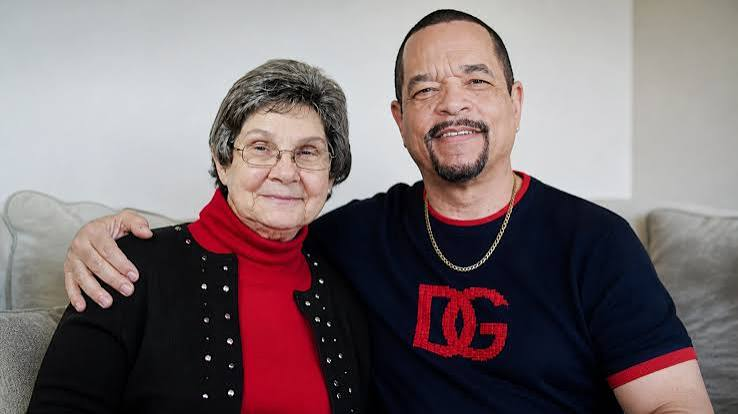
Alice Marrow lived a private life, but her influence reached far beyond the years she was alive. She was the wife of Solomon Marrow and the mother of Tracy Lauren Marrow, who became internationally known as Ice-T. She helped raise her son in New Jersey, guided him through his earliest experiences with race and identity, and provided a family foundation before her death from a heart attack during his elementary-school years.
Her death was followed by the loss of her husband several years later, leaving Ice-T to navigate childhood without his parents. Despite those hardships, he eventually built a remarkable career as a rapper, songwriter, actor, producer, and television personality. The fact that he continues to discuss his childhood and the lessons he learned from his parents shows how deeply those early experiences remained part of his identity.
Alice Marrow may never have stood on a concert stage or appeared in a television drama, but her place in Ice-T’s story gives her lasting historical and personal significance. Her biography is necessarily limited because she lived outside the public eye, yet the available evidence reveals a mother whose short life helped shape the early character of a future cultural icon. For anyone searching for Alice Marrow, understanding that quiet influence is ultimately more meaningful than unsupported details about a life that was never intended for celebrity.
