

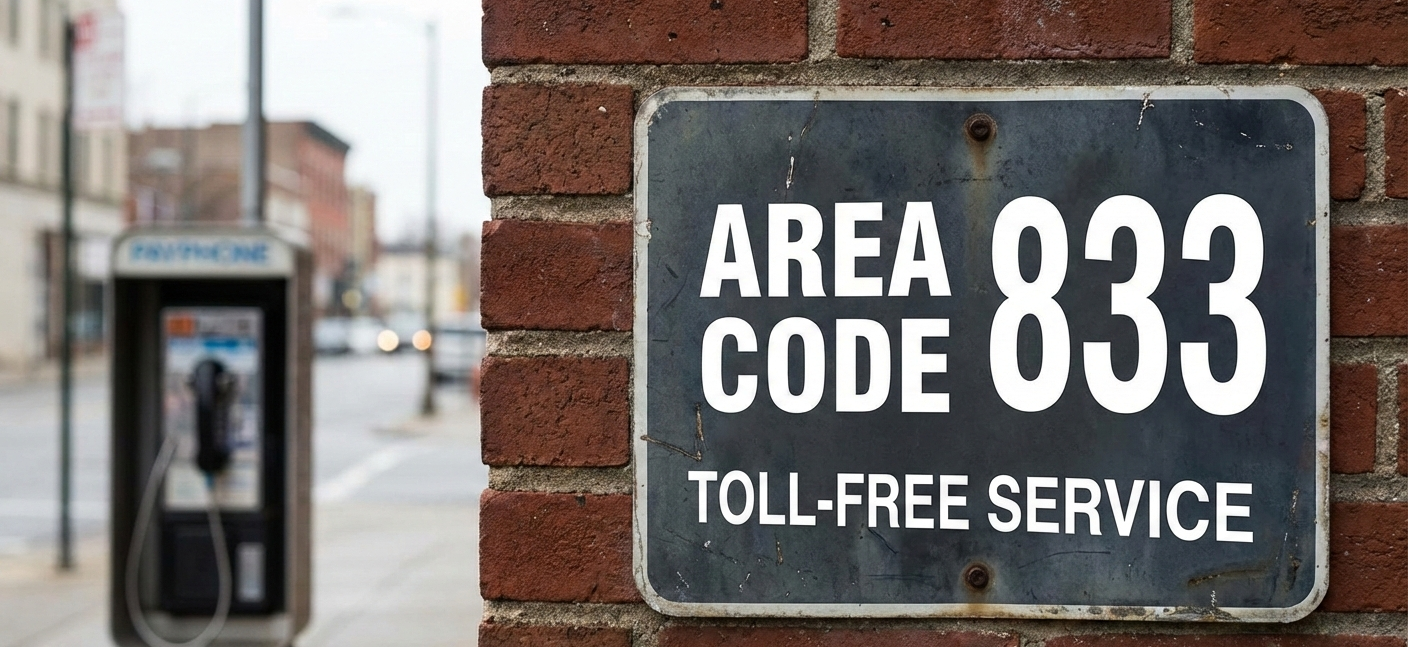
The 833 area code is one of the newest toll-free calling codes used across North America. If you have recently received a call or text from a number starting with 833, you may be wondering where it comes from, whether it is safe, and why businesses use it instead of a regular phone number.
This detailed guide explains everything — what the 833 area code is, how it works, who uses it, whether it is legitimate, and how to protect yourself from scams.
Understanding the 833 Area Code
The 833 area code is a toll-free number. That means the person receiving the call does not pay for it — the business or organization calling you pays the charges instead.
Unlike geographic area codes (like 212 for New York or 213 for Los Angeles), toll-free codes are not tied to a city or state.
So the most important thing to understand:
An 833 number can come from anywhere in the United States, Canada, or other North American Numbering Plan countries.
You cannot identify the caller’s location simply by the 833 prefix.
Toll-Free Area Codes List
The 833 area code belongs to a family of toll-free numbers used by businesses and services.
| Toll-Free Code | Introduced |
|---|---|
| 800 | Original (1966) |
| 888 | 1996 |
| 877 | 1998 |
| 866 | 2000 |
| 855 | 2010 |
| 844 | 2013 |
| 833 | 2017 |
| 822 | Reserved for future use |
The increasing number of toll-free codes happened because companies needed more available phone numbers.
Why the 833 Area Code Was Created
For decades, businesses preferred memorable toll-free numbers — for example:
- 1-800-FLOWERS
- 1-800-CONTACTS
- 1-800-LAWYERS
But demand exploded due to:
- online shopping
- call centers
- customer service lines
- marketing campaigns
- support hotlines
Eventually, older toll-free ranges ran out of available numbers.
The 833 area code was introduced in 2017 to expand the available supply.
Where Is the 833 Area Code Located?
The simple answer:
The 833 area code has no physical location.
It is not tied to any country region, city, or state.
Instead, it works across:
- United States
- Canada
- Puerto Rico
- Caribbean NANP regions
It functions like a nationwide business hotline.
Who Uses the 833 Area Code
Most calls from 833 numbers come from organizations rather than individuals.
1. Businesses
Companies use toll-free numbers to allow customers to call without paying long-distance charges.
Examples:
- banks
- airlines
- insurance companies
- online stores
- telecom providers
2. Customer Support Centers
Many support departments operate nationally. The 833 number lets customers call from anywhere.
Typical uses:
- account help
- order tracking
- service complaints
- warranty claims
3. Marketing and Sales Teams
Telemarketing campaigns frequently use 833 numbers because they appear professional and credible.
4. Government and Non-Profit Organizations
Helplines, assistance programs, and public information services often use toll-free numbers to improve accessibility.
Are 833 Area Code Calls Legitimate?
Yes — but sometimes no.
The 833 area code itself is legitimate. However, scammers can also use it.
Because toll-free numbers look trustworthy, fraudsters often choose them to trick people.
So you must judge the caller, not just the area code.
Common Legitimate Calls from 833 Numbers
You might receive a genuine call if:
- you contacted customer service earlier
- you signed up for an account
- you requested a callback
- a delivery service needs directions
- a bank needs verification
Many companies return missed calls using an 833 number.
Common 833 Area Code Scams
Scammers spoof toll-free numbers because people trust them more than unknown local numbers.
Here are frequent fraud types:
1. Bank Fraud Calls
Caller claims suspicious activity on your account and asks for:
- OTP codes
- passwords
- card numbers
Real banks never ask this.
2. IRS or Tax Threat Scams
They claim you owe taxes and threaten arrest unless you pay immediately.
Government agencies never demand payment over phone.
3. Tech Support Scams
Caller says your computer is infected and asks you to install software.
They then steal data.
4. Delivery or Package Scams
Fake courier asks for verification fees.
5. Warranty Extension Robocalls
Automated messages about car warranties or subscriptions.
How to Tell If an 833 Call Is Safe
Before trusting a call, check these signs.
Safe Indicators
- You initiated the contact
- The caller knows your previous request
- No demand for payment immediately
- No request for passwords
Danger Signs
- urgency or threats
- request for verification code
- asking for banking info
- refusing to identify company
- robotic voice asking to press numbers
If you notice any danger sign — hang up.
Can You Call Back an 833 Number?
Yes.
Calling an 833 number is free for you in most cases.
That is the purpose of toll-free numbers — the receiver pays.
However:
If the call was suspicious, do not call back until you verify the organization independently through its official website.
Why Businesses Prefer 833 Numbers
Companies choose toll-free numbers for psychological and practical reasons.
Professional Image
Customers trust toll-free numbers more than random mobile numbers.
Nationwide Reach
Businesses operate across states without needing local phone lines.
Easy Branding
Memorable numbers improve marketing recall.
Customer Convenience
Customers can call without worrying about long-distance charges.
How 833 Numbers Work Technically
Toll-free numbers use a system called Responsible Organization (RespOrg) routing.
Instead of connecting to a fixed landline, the number routes dynamically to:
- call centers
- mobile phones
- VoIP systems
- cloud PBX networks
Businesses can change the destination without changing the number.
This allows flexible customer support operations.
Text Messages from 833 Area Code
Yes — 833 numbers can send SMS messages.
Legitimate uses include:
- appointment reminders
- order updates
- verification codes
- service notifications
But scammers also send phishing texts.
Never click unknown links from an 833 message unless you requested it.
Is the 833 Area Code VoIP?
Most of the time — yes.
Modern toll-free numbers run on VoIP infrastructure rather than traditional landlines.
This allows:
- call recording
- automatic routing
- voice menus
- nationwide coverage
But it also makes spoofing easier for scammers.
How to Check Who Owns an 833 Number
You can verify the caller using:
- Official company website
- Reverse phone lookup services
- Google search of the number
- Calling the company directly
Never trust the caller ID alone.
Blocking 833 Area Code Calls
If you keep getting unwanted calls, you can block them.
On iPhone
Settings → Phone → Blocked Contacts → Add Number
On Android
Phone App → Recent Calls → Block Number
You can also enable spam filtering in phone settings.
Can Individuals Get an 833 Number?
Yes.
Not only large corporations — anyone can purchase a toll-free number.
Small businesses and freelancers often use them to appear more professional.
Cost of an 833 Number
The caller (business) pays the charges.
Typical pricing includes:
- monthly subscription
- per-minute incoming call fee
- optional SMS services
For the receiver, calls are free.
Difference Between 833 and 800 Numbers
Functionally they are identical.
The only difference:
800 numbers are older and harder to obtain memorable combinations.
833 numbers exist simply because older ranges ran out.
Customers experience no difference.
Why You Keep Getting 833 Calls
Possible reasons include:
- marketing lists
- online purchases
- account verification
- recycled phone numbers
- data leaks
Sometimes your number previously belonged to someone else.
Should You Answer 833 Calls?
It depends.
Answer if:
- expecting delivery
- expecting support callback
- business contact pending
Ignore if:
- unknown automated message
- late night calls
- repeated daily dialing
Are 833 Numbers International?
No.
They are part of the North American Numbering Plan only.
They usually do not work from outside participating countries.
Businesses That Often Use 833 Numbers
Common industries include:
- banking
- healthcare scheduling
- airlines
- telecom support
- e-commerce companies
- insurance providers
- government hotlines
Robocalls and the 833 Area Code
Many robocalls use toll-free numbers because they bypass geographic filtering.
Modern spam systems can generate thousands of calls daily.
Regulations exist, but enforcement varies.
How to Report Scam 833 Numbers
You can report fraudulent calls to consumer protection agencies in your country.
Provide:
- phone number
- time of call
- message content
Reporting helps block large scam operations.
The Future of Toll-Free Numbers
Demand for business communication continues to grow.
More toll-free ranges may be introduced in the future as businesses expand digital support services.
The 833 area code is part of that expansion.
Frequently Asked Questions
Is the 833 area code fake?
No. It is a real toll-free number range, but scammers can use it.
Can I text back an 833 number?
Yes, but only if you trust the sender.
Does answering cost money?
No, receiving calls is free.
Can I own one?
Yes, individuals and businesses can purchase them.
Final Thoughts
The 833 area code is a legitimate toll-free calling system designed to make communication easier between businesses and customers across North America. It does not represent a physical location and should not automatically be trusted or feared.
The key point is simple:
The area code itself is safe — the caller may not be.
Always verify unknown callers, never share personal information over the phone, and block suspicious numbers when necessary.
Understanding how the 833 area code works helps you confidently decide whether to answer, ignore, or report the call — turning confusion into awareness and protection.
READ MORE: UPLOAD ARTICLES
